Tampilkan postingan dengan label The Most Travel. Tampilkan semua postingan

Rabu, 09 Juni 2010

Best 10 Most Romantic Tropical Beaches

Whether you are a fresh couple or you are celebrating your 50th anniversary, beaches are an ideal destination for romantic couples. Escape with your sweetie to an intimate island getaway like Hawaii or the spectacular Bora Bora. Take a walk on the beach or the shoreline at sunset or in the moonlight. Cuddle on a blanket with candles all around, while you stare at the stars and listen to the waves crash.... Magical

borabora_lemeridien_waterbungalow_01 Whether you decide one of our picks on most romantic beaches or choose somewhere else, feeling the breeze on you skin, relaxing in the sand will sure heat up your relationship or marriage.


1.Hawaii - Truly paradise

Hawaii - Truly paradise

Hawaii is one of the biggest honeymoon destinations in the world. Whether you are in Kauai, Maui or Big island, Hawaii offers excellent options for couples. Here you will find blue lagoons, lush rainforests, hidden gardens, cascading waterfalls, wild rivers running through rugged canyons, and soaring volcanoes. And oh, those beaches, you can enjoy some of the most breathtaking beaches in the world.The possibilities for adventure -- and relaxation -- are endless.. The last, but definitely not least, thing that should be on your list of things to do is a luau. You cannot visit any Hawaiian island and not enjoy a luau. Hawaii is truly paradise.

2.Bora Bora - Unforgettably stunning

Bora Bora - Unforgettably stunning

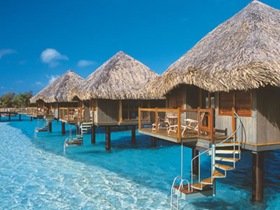
Bora Bora is known as the most famous island in the world and remains the island of all dreams. Don't think you can't get here. The view of Bora Bora from the airport is truly breathtaking, and as you travel across the spectacular lagoon you will soon understand why it is the main area of attraction for most visitors. Of course, the lagoon is the centerpiece. The colors are simply breathtaking. Some say there are more than five shades of blue/turquoise as you are coming over the lagoons and reefs. You can wade in it, swim, snorkel, scuba, jetski, windsurf, or just take it in as the most wonderful piece of nature it is. It's really up to you. And believe us when we tell you, your vacation to Bora Bora will never be forgotten.

3.Aruba – Bonbini

Aruba – Bonbini

Bonbini, in the native language of Papiamento, means "Welcome". Welcome to Aruba. When you land in Aruba, you just have to admit there's a part of paradise located here. This tiny island in the Caribbean Sea, north of Venezuela, is huge with contrasts. And if its true that opposites attract, then this could well be the most attractive island of them all. One shore of Aruba is shallow with pristine white sand beaches, while the other side is rocky, deep and rough seas that open to the sea. As you explore and get to know Aruba, you'll soon begin to notice the smiling faces everywhere and as any traveler here will tell you, must surely be among the most welcoming places on Earth. So, sit back, relax or explore, there are many things to do, places to go and see.

4.Barbados

You have dreamt of relaxing on a beautiful sandy beach under the warm afternoon sun without a care in the world..... You have decided you need a break from the burdens of everyday life and that it is time for a trip to a tropical paradise.... OK, now all you need to know is where is Barbados. If you look at Barbados on the world map you will see that this Caribbean island is shaped like a pear with the stem end pointing towards the north, standing slightly outside the arc of the Lesser Antilles. Barbados is one of the most visited of the Caribbean islands. Along the west and south coasts resorts abound sheltered from the turbulent Atlatic Ocean and the easterly trade winds taking full advantage of the white sands and crystalline waters. What many people are unaware of is the spectacular beauty that lies beneath the surface of the sea where coral reef snorkeling and swimming with sea turtles are just some of the myriad recreational pursuits available. Warm clear Caribbean sea, rolling hills and valleys, and those beautiful white sanded beaches. A touch of British charm, great food, lots of activities, and everything else that you would need for a romantic vacation in the sun.

5.Saint Thomas

Saint Thomas is an island in the Caribbean Sea, part of the Virgin Islands along with St. John and St. Croix. St. Thomas is famous for its beaches and shopping, bed and breakfasts, an island that caters to couples and families. There is a limited party scene so you will get peace and quiet as you stare into your lover's eyes. What could be more romantic than a Caribbean sunset, a secluded Caribbean beach, a candlelight dinner or dancing under the Caribbean stars ?

6.The Bahamas

If gorgeous beaches, bright sun, sheer white curtains blowing in the breeze, beautifully designed contemporary rooms, elegant meals are your cup of pina colada, check out Bahamas. Whether you want resorts that are in the midst of the action or removed from it, they have your choice in the Bahamas -- after all, there are some 700 islands in the archipelago. Ample places to kick back, order a pina colada, and let the sun and the sunsets work their magic. The Bahamas has the perfect conditions for romance and love. With breathtaking panoramic views, the softest sandy white or pink beaches, the sunsets that slow dance with the sea and the musical waves lapping on the shore around your ankles, so happy to greet you. You feel like you are the only two on the beach. No footprints but yours. No crowds, no reservations for dinner.

7.Jamaica

Find the perfect romance In Jamaica for your next vacation. A country whose motto is "One Love", Jamaica is the perfect place for a romantic getaway or honeymoon. Jamaica has hundreds of miles of beautiful coastline. The beaches of Jamaica are some of the finest in the Caribbean. Some beaches are lively, fun-filled places, packed with young sunbathers listening to loud reggae music, other beaches in Jamaica are serene, secluded stretches of white sand perfect for relaxing and unwinding. So a couple could be forgiven for spending their entire heavenly vacation basking in the seductive warmth of the ever-present sunshine, while sipping exotic tropical drinks and gazing out at the endless expanse of aquamarine sea. Jamaica is so much more than just a beach, it's the perfect couples getaway.

8.The Seychelles - Tropical heaven

Conveniently located at the intersection of heaven and earth, these Indian Ocean islands are a place with picture-perfect stretches of powder-white beaches, lagoons that sparkle like diamonds and sunsets to die for. It's exotic; out of the way location makes it a great place to get to know your loved one. There are golf courses, spas, fishing trips, and tropical drinks. Honeymoon here and you'll never want to leave.

9.The Maldives

Locate on the equator, southwest of Sri Lanka, these islands are one of the most awesome destinations. A thousand breathtaking islands with sun, sand and sea, huge lagoons with different depths and infinite shades of blue and turquoise. It is a perfect natural combination for the a tropical island wedding, honeymoon or holiday destination. The most inviting part of Maldives is the Maldives Islands and beaches, which offer relaxed atmosphere to calm your mind and soul. The soft white Maldives beaches, the clear blue waters, the lush green plantations, the glittering sands and the stimulating palm lined walkways offer a different ecstasy to all tourists. Winter is the best time to enjoy vacation in Maldives. Visit Maldives during December to March to enjoy a dream vacation.

10.The Belize

The islands out in the reef give couples a chance to get away from everyone on private beaches and explore the fish filled waters. The rain forests, reefs and ruins of Belize abound with natural and cultural diversity create an exotic backdrop for romance, adventure and relaxation. Explore the inland rain forests and ancient Maya ruins, take the plunge into the largest barrier reef in the western hemisphere are only few of the attractions. A tropical romantic vacation adventure set in distinctive luxury ecolodge and a collection of private, thatched-roofed bungalows provides sultry comfort. A breathtaking destination for couples wanting a different kind of romance.

Minggu, 18 April 2010

The Porcelain Tower of Nanjing

Porcelain Tower of Nanjing

Location:
Nanjing, China, out on the banks of the Yangtze.

History:
The people of China called it Bao'ensi, the "Temple of Gratitude." European visitors who beheld the structure called it the Porcelain Tower of Nanjing and labeled it one of the wonders of the world. But warfare and subsequent destruction overtook it in the 19th century, and this remarkable structure was almost lost to history, virtually forgotten by the world.

Still, for many people who had known the tower firsthand, it was a sublimely elegant example of a Buddhist pagoda. "The best contrived and noblest structure of all the East," wrote Le Comte, the French mathematician who had made a visit to China in the early 19th century.

Description
From an octagonal base about 97 feet in diameter, the tower's nine stories rose pyramidally to a height of about 260 feet. According to information obtained by an American missionary who journeyed to Nanjing in 1852, the original plan for the tower had called for 13 stories and a total height of about 330 feet. Although those ambitious dimensions were never realized, the smaller size made little difference, because size was not what made the structure so memorable for visitors.

The brilliant white porcelain bricks that faced the tower were what made it so unforgettable. By day, the bricks glittered in the sun, and at night they were illuminated by perhaps as many as 140 lamps hanging around the exterior of the pagoda. Worked into the porcelain panels were colorful stoneware tiles with green, yellow, white, and brown glazes forming images of animals, landscapes, flowers, and bamboo.


The Lighthouse of Alexandria

The History of the Lighthouse of Alexandria

Of the Seven Wonders of the Ancient World, only one had a practical use in addition to its architectural elegance: The Lighthouse of Alexandria. For sailors, it ensured a safe return to the Great Harbor. For architects, it meant even more: it was the tallest building on Earth. And for scientists, it was the mysterious mirror that fascinated them most... The mirror's reflection could be seen more than 50 km (35 miles) off-shore.

Location
On the ancient island of Pharos, now a promontory within the city of Alexandria in Egypt.

History
Shortly after the death of Alexander the Great, his commander Ptolemy Soter assumed power in Egypt. He had witnessed the founding of Alexandria, and established his capital there. Off of the city's coast lies a small island: Pharos. Its name, legend says, is a variation of Pharaoh's Island. The island was connected to the mainland by means of a dike - the Heptastadion - which gave the city a double harbor. And because of dangerous sailing conditions and flat coastline in the region, the construction of a lighthouse was necessary.

The project was conceived and initiated by Ptolemy Soter around 290 BC, but was completed after his death, during the reign of his son Ptolemy Philadelphus. Sostratus, a contemporary of Euclid, was the architect, but detailed calculations for the structure and its accessories were carried out at the Alexandria Library/Mouseion. The monument was dedicated to the Savior Gods: Ptolemy Soter (lit. savior) and his wife Berenice. For centuries, the Lighthouse of Alexandria (occasionally referred to as the Pharos Lighthouse) was used to mark the harbor, using fire at night and reflecting sun rays during the day. It was even shown on Roman coins, just as famous monuments are depicted on currency today.

When the Arabs conquered Egypt, they admired Alexandria and its wealth. The Lighthouse continues to be mentioned in their writings and travelers accounts. But the new rulers moved their capital to Cairo since they had no ties to the Mediterranean. When the mirror was brought down mistakenly, they did not restore it back into place. In AD 956, an earthquake shook Alexandria, and caused little damage to the Lighthouse. It was later in 1303 and in 1323 that two stronger earthquakes left a significant impression on the structure. When the famous Arab traveler Ibn Battuta visited Alexandria in 1349, he could not enter the ruinous monument or even climb to its doorway.

The final chapter in the history of the Lighthouse came in AD 1480 when the Egyptian Mamelouk Sultan, Qaitbay, decided to fortify Alexandria's defense. He built a medieval fort on the same spot where the Lighthouse once stood, using the fallen stone and marble.

Description
Of the six vanished Wonders, the Lighthouse of Alexandria was the last to disappear. Therefore we have adequately accurate knowledge of its location and appearance. Ancient accounts such as those by Strabo and Pliny the Elder give us a brief description of the "tower" and the magnificent white marble cover. They tell us how the mysterious mirror could reflect the light tens of kilometers away. Legend says the mirror was also used to detect and burn enemy ships before they could reach the shore.

In 1166, an Arab traveler, Abou-Haggag Al-Andaloussi visited the Lighthouse. He documented a wealth of information and an gave accurate description of the structure which helped modern archeologists reconstruct the monument. It was composed of three stages: The lowest square, 55.9 m (183.4 ft) high with a cylindrical core; the middle octagonal with a side length of 18.30 m (60.0 ft) and a height of 27.45 m (90.1 ft); and the third circular 7.30 m (24.0 ft) high. The total height of the building including the foundation base was about 117 m (384 ft), equivalent to a 40-story modern building. The internal core was used as a shaft to lift the fuel needed for the fire. At the top stage, the mirror reflected sunlight during the day while fire was used during the night. In ancient times, a statue of Poseidon adorned the summit of the building.

Although the Lighthouse of Alexandria did not survive to the present day, it left its influence in various respects. From an architectural standpoint, the monument has been used as a model for many prototypes along the Mediterranean, as far away as Spain. And from a linguistic standpoint, it gave its name -- Pharos -- to all the lighthouses in the world... Just look up the dictionary for the French, Italian, or Spanish word for lighthouse.

The Great Pyramid of Giza

It is the one and only Wonder which does not require a description by early historians and poets. It is the one and only Wonder that does not need speculations concerning its appearance, size, and shape. It is the oldest, yet it is the only surviving of the Seven Ancient Wonders. It is the Great Pyramid of Giza.

Location:
At the city of Giza, a necropolis of ancient Memphis, and today part of Greater Cairo, Egypt.

History
Contrary to the common belief, only the Great Pyramid of Khufu (Cheops), not all three Great Pyramids, is on top of the list of Wonders. The monument was built by the Egyptian pharaoh Khufu of the Fourth Dynasty around the year 2560 BC to serve as a tomb when he dies. The tradition of pyramid building started in Ancient Egypt as a sophistication of the idea of a mastaba or "platform" covering the royal tomb. Later, several stacked mastabas were used. Early pyramids, such as the Step Pyramid of King Zoser (Djoser) at Saqqara by the famous Egyptian architect, Imhotep, illustrate this connection.

The great pyramid is believed to have been built over a 20 year period. The site was first prepared, and blocks of stone were transported and placed. An outer casing (which disappeared over the years) was then used to smooth the surface. Although it is not known how the blocks were put in place, several theories have been proposed. One theory involves the construction of a straight or spiral ramp that was raised as the construction proceeded. This ramp, coated with mud and water, eased the displacement of the blocks which were pushed (or pulled) into place. A second theory suggests that the blocks were placed using long levers with a short angled foot.

Throughout their history, the pyramids of Giza have stimulated human imagination. They were referred to as "The Granaries of Joseph" and "The Mountains of Pharaoh". When Napoleon invaded Egypt in 1798, his pride was expressed through his famous quote: "Soldats! Du haute de ces Pyramides, 40 siècles nous contemplent". (Soldiers! From the top of these Pyramids, 40 centuries are looking at us)

Today, the Great Pyramid is enclosed, together with the other pyramids and the Sphinx, in the touristic region of the Giza Plateau. Also in the area is the museum housing the mysterious Sun Boat, only discovered in 1954 near the south side of the pyramid. The boat is believed to have been used to carry the body of Khufu in his last journey on earth before being buried inside the pyramid. It may also serve him as a means of transportation in his afterlife journey according to Ancient Egyptian beliefs.

Description
When it was built, the Great pyramid was 145.75 m (481 ft) high. Over the years, it lost 10 m (30 ft) off its top. It ranked as the tallest structure on Earth for more than 43 centuries, only to be surpassed in height in the nineteenth century AD. It was covered with a casing of stones to smooth its surface (some of the casing can still be seen near the top of Khefre's pyramid). The sloping angle of its sides is 54 degrees 54 minutes. Each side is carefully oriented with one of the cardinal points of the compass, that is, north, south, east, and west. The horizontal cross section of the pyramid is square at any level, with each side measuring 229 m (751 ft) in length. The maximum error between side lengths is astonishingly less than 0.1%.

The structure consists of approximately 2 million blocks of stone, each weighing more than two tons. It has been suggested that there are enough blocks in the three pyramids to build a 3 m (10 ft) high, 0.3 m (1 ft) thick wall around France. The area covered by the Great pyramid can accommodate St Peter's in Rome, the cathedrals of Florence and Milan, and Westminster and St Paul's in London combined.

On the north face, is the pyramid's entrance. A number of corridors, galleries, and escape shafts either lead to the King's burial chamber, or were intended to serve other functions. The King's chamber is located at the heart of the pyramid, only accessible through the Great Gallery and an ascending corridor. The King's sarcophagus is made of red granite, as are the interior walls of the King's Chamber. Most impressive is the sharp-edged stone over the doorway which is over 3 m (10 ft) long, 2.4 m (8 feet) high and 1.3 m (4 ft) thick. All of the interior stones fit so well, a card won't fit between them. The sarcophagus is oriented in accordance with the compass directions, and is only about 1 cm smaller in dimensions than the chamber entrance. It might have been introduced as the structure was progressing.

New theories concerning the origin and purpose of the Pyramids of Giza have been proposed... Astronomic observatories... Places of cult worship... Geometric structures constructed by a long-gone civilization... Even extraterrestrial-related theories have been proposed with little evidence in support... The overwhelming scientific and historic evidence still supports the conclusion that, like many smaller pyramids in the region, the Great Pyramids were built by the great Ancient Egyptian civilization off the West bank of the Nile as tombs for their magnificent Kings... Tombs where Khufu, Khefre, and Menkaure could start their mystic journey to the afterlife.

Yushan (mountain)

Yushan (Chinese: 玉山; pinyin: Yùshān; also known as Jade Mountain or Mount Yu) is the highest mountain in Taiwan and the fourth highest mountain on an island. Earlier, at the times when few Taiwanese could speak English, it was known among the expats, mostly missionaries, as Mt. Morrison, thought to have been named so in honor of the 19th century missionary Robert Morrison. After the Taiwanese have begun to assert themselves in the English language discourse on the island, the mountain has been referred to almost exclusively as Yu Shan.

In the winter, Yushan is often capped with thick snow which makes the entire peak shine like stainless jade, hence its name. On July 21, 2009. Yushan was elected one of 28 finalists in the New7Wonders of Nature voting campaign. It even had held the top position in the “Mountains and Volcanos” category on the list of first round voting of the 77 nominees ended on July 7, 2009.

Yushan and surrounding mountains belong to Yushan Range, which is part of Yushan National Park in Taiwan. Yushan National Park is Taiwan's largest, highest and least accessible national park. It contains the largest tract of wilderness remaining in Taiwan and is also valued for its pristine forests and faunal diversity, including many endemic species.

The highest point of Yushan range, Yushan, is 3,952 metres (12,966 ft) above sea level. Yushan was once in the ocean and raised to the current height because the Eurasian Plate slid under the neighboring Philippine Sea Plate.

The ocean waters off Taiwan's east coast are deep; in fact, submarine slopes plunge down to the Pacific Ocean at a grade of 1:10 and the ocean reaches a depth of more than 4,000 metres (13,100 ft) about 50 kilometres (30 mi) from the coast.[1] From this perspective, Yushan is even more magnificent if you consider it rises 8,000 metres (26,200 ft) steeply from the nearby ocean floor in such a short distance — est 100 kilometres (60 mi).

http://cdn.vote7.net/community/sites/default/files/imagecache/overlay/images/member/765807/Mt._Jade_Main_Peak_in_Winter_by_Ming_Jing_Jhuang_0.jpg

Geography and geology

The island of Taiwan is situated at the intersection of two tectonic plates — the Eurasian Plate and the Philippine Sea Plate. Even as “recently” as the late Paleozoic (some 250 million years ago), the land here was still but a sedimentary seabed layered with silt and sand. As the two plates began pressing against each other, the land buckled, bent, and created the landscape — 165 mountains higher than 3,000 m (9,800 ft) above sea level on a small island (38th in the world).


Best 9 Most Beautiful Temples Of The World

Here is a listing of some of the beautiful temples of the World! Includes the Harmandir Sahib in Amritsar, Taktshang in Bhutan, Wat Rong Khun in Thailand, Prambanan in Indonesia, Shwedagon Pagoda in Burma, Temple of Heaven in Beijing, Chion-in in Japan, Sri Ranganathaswamy Temple in Tamil Nadu & the Angkor Wat in Cambodia.



Taktshang


Taktshang

Taktshang is the most famous of monasteries in Bhutan. It hangs on a cliff at 3,120 metres (10,200 feet), some 700 meters (2,300 feet) above the bottom of Paro valley, some 10 km from the district town of Paro. Famous visitors include Shabdrung Ngawang Namgyal in the 17th century and Milarepa. The name means "Tiger's nest", the legend being that Padmasambhava (Guru Rinpoche) flew there on the back of a tiger. The monastery includes seven temples which can all be visited. The monastery suffered several blazes and is a recent restoration. Climbing to the monastery is on foot or mule.

Wat Rong Khun

Wat Rong Khun
Wat Rong Khun

Wat Rong Khun is a contemporary unconventional buddhist temple in Chiang Rai, Thailand. It was designed by Chalermchai Kositpipat. Construction began in 1998 and is expected to end in 2008. Wat Rong Khun is different from any other temple in Thailand, as its ubosot (Pali: uposatha; consecrated assembly hall) is designed in white color with some use of white glass. The white color stands for Lord Buddha’s purity; the white glass stands for Lord Buddha’s wisdom that "shines brightly all over the Earth and the Universe."

Prambanan

Prambanan
Prambanan

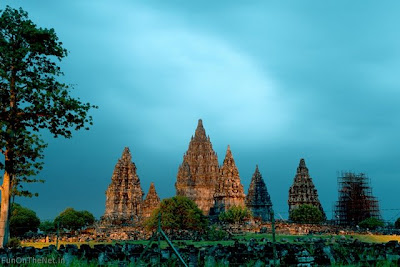
Prambanan is the largest Hindu temple compound in Central Java in Indonesia, located approximately 18 km east of Yogyakarta. The temple is a UNESCO World Heritage Site and is one of the largest Hindu temples in south-east Asia. It is characterised by its tall and pointed architecture, typical of Hindu temple architecture, and by the 47m high central building inside a large complex of individual temples.

Shwedagon Pagoda

Shwedagon Pagoda
Shwedagon Pagoda

The Shwedagon Pagoda also known as the Golden Pagoda, is a 98-metre (approx. 321.5 feet) gilded stupa located in Yangon, Burma. The pagoda lies to the west of Kandawgyi Lake, on Singuttara Hill, thus dominating the skyline of the city. It is the most sacred Buddhist pagoda for the Burmese with relics of the past four Buddhas enshrined within, namely the staff of Kakusandha, the water filter of Konagamana, a piece of the robe of Kassapa and eight hairs of Gautama, the historical Buddha.

Temple of Heaven

Temple of Heaven
Temple of Heaven

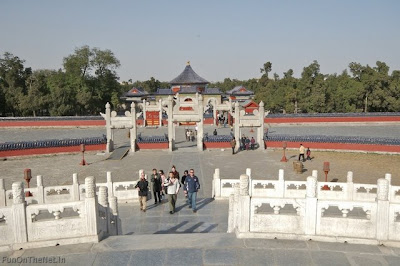
The Temple of Heaven, literally the Altar of Heaven is a complex of Taoist buildings situated in southeastern urban Beijing, in Xuanwu District. The complex was visited by the Emperors of the Ming and Qing dynasties for annual ceremonies of prayer to Heaven for good harvest. It is regarded as a Taoist temple, although Chinese Heaven worship, especially by the reigning monarch of the day, pre-dates Taoism.

Chion-in

Chion-in
Chion-in

Chion'in Temple in Higashiyama-ku, Kyoto, Japan is the headquarters of the Jodo Shu (Pure Land Sect) founded by Honen (1133-1212), who proclaimed that sentient beings are reborn in Amida Buddha's Western Paradise (Pure Land) by reciting the nembutsu, Amida Buddha's name. The vast compounds of Chion-in include the site where Honen settled to disseminate his teachings and the site where he died.

Harmandir Sahib

Harmandir Sahib
Harmandir Sahib

Sri Harmandir Sahib or Darbar Sahib, informally referred to as The Golden Temple or Temple of God, is culturally the most significant place of worship of the Sikhs and one of the oldest Sikh gurdwaras. It is located in the city of Amritsar, which was established by Guru Ram Das, the fourth guru of the Sikhs and the city that it was built in, is also due to the shrine, known as "Guru Di Nagri" meaning city of the Sikh Guru.

Sri Ranganathaswamy Temple (Srirangam)

Sri Ranganathaswamy
Sri Ranganathaswamy

The temple occupies an area of 156 acres (6,31,000 m²) with a perimeter of 1,116m (10,710 feet) making it the largest temple in India and one of the largest religious complexes in the world. In fact, Srirangam temple can be easily termed as the largest functioning Hindu temple in the world (Angkor Wat being the largest non-functioning temple). The temple is enclosed by 7 concentric walls with a total length of 32,592 feet or over six miles. These walls are enclosed by 21 Gopurams (Towers). Among the marvels of the temple is a "hall of 1000 pillars" (actually 953).

Angkor Wat

Angkor Wat
Angkor Wat

Angkor Wat (or Angkor Vat), is a temple complex at Angkor, Cambodia, built for King Suryavarman II in the early 12th century as his state temple and capital city. As the best-preserved temple at the site, it is the only one to have remained a significant religious centre since its foundation—first Hindu, dedicated to Vishnu, then Buddhist. The temple is the epitome of the high classical style of Khmer architecture. It has become a symbol of Cambodia, appearing on its national flag, and it is the country's prime attraction for visitors.

Sabtu, 17 April 2010

Best 10 Must-See Attractions in Chengdu

chengdu5 Sichuan is one of the most culturally vibrant provinces in the People’s Republic of China. The province, incredibly, is home to almost 90 million people and hundreds of venerable shrines, landmarks and UNESCO World Heritage Giant Panda reserves. Sichuan food of course, is famous across the globe as one of Four Great Traditions in Chinese cuisine. From humble roadside carts to spectacular Imperial banquets, it’s tough to get a bad meal anywhere in Sichuan – especially if you have a nose for the province’s fresh, fragrant, hot and spicy fare.

Brilliant Chengdu is the capital of Sichuan province. The city of 13 million plus people is also the unequivocal economic and commercial hub of Sichuan, with several major technological and industrial zones in the metropolitan area. For visitors however, Chengdu has a different side. Nightlife, arts and culture, heritage architecture and the fertile, “Land of Abundance” countryside outside of Chengdu proper are just some of the reasons why the city is easily one of the most livable and enjoyable to visit in China.

Here are ten must-see attractions in Chengdu.

10. Sichuan Opera

A formidable spoke in the cultural wheel of Sichuan, traditional opera is a must in Chengdu. The provincial capital is the heart of the venerable art. The quest to find a reputable source however, can lead to some burlesque-type duds. So beware and consult your hotel in order to secure tickets to a genuine Sichuan opera performance.

Sichuan opera performance in Chengdu

9. Jinli Ancient Street

Despite the prevalence of some tourist traps, Jinli Ancient Street is a great area to explore in Chengdu. The thoroughfare is part of the old city and has many popular bars, restaurants and nightclubs. For locals and visitors alike however, Jinli’s notoriety is all about affordable and superior street food.

Jinli Ancient Street, Chengdu

8. Sichuan University

More than 70,000 students attend Sichuan University in Chengdu and the academic institution is one of the most revered in China. The Wangjiang, Huaxi and Jiang’an sectors of campus are full of superb landmarks, some of which date back to the university’s foundation in the late 19th century, and all told, are well worth a stroll.

Sichuan University campus, Chengdu

7. Sichuan Science and Technology Museum

Forget the name – the Sichuan Science and Technology Museum is far from stuffy. The fun, interactive and massive museum is just as much for adults, as it is for kids.

Sichuan Science and Technology Museum

6. Green Ram Temple

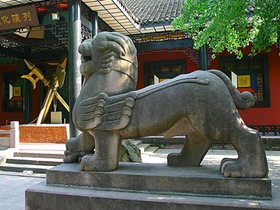
Chengdu’s Green Ram Temple is the oldest Taoist shrine complex in the province and the headquarters of the Sichuan Taoist Association. Remember to stroke the bronze goat for good health and fortune.

Temple in Chengdu

5. Tianfu Square

The nerve centre of Chengdu and node of the city’s subway system is impossible to miss. Just look out for swarms of commuters, a big fountain show after dusk and giant Mao monument. Tianfu Square is the gateway to many of Chendu’s most dynamic points of interest.

Tianfu Square

4. Jinsha Excavation Site

For proof that Sichuan sits on thousands of years of history, visit Chengdu’s exquisite Jinsha Excavation Site. Tools, jewelry, pottery and other artifacts on display date back more than 3,000 years. In what is sure to be a trend as China’s urban sprawl spreads into the vast hinterlands, the archaeological site in Chengdu’s western suburbs was hit on by accident over the course of real estate development in 1991.

Jinsha Excavation Site

3. Wenshu Monastery

Home to the most sacred Buddhist temple in Chengdu, Wenshu Monastery is a foremost place of worship, veneration and serenity in the city.

Wenshu Temple, Chengdu

2. Huanglong

Huanglong is a bit of a cheat entry here, since technically, the UNESCO World Heritage scenic area is 150 km from Chengdu. Still, it would be a shame to visit the Sichuan capital and not make the trek to this remarkably historic region of lush ecosystems, snowy summits, powerful cascades, hot springs, Giant Pandas and Golden Snub-nosed Monkeys.

Giant Panda reserve outside of Chengdu

1. Du Fu Thatched Cottage Museum

A serene 97,000 m2 National Heritage Site, Du Fu Thatched Cottage Museum preserves the legacy of Tang Dynasty poet Du Fu. The famous thatched cottage on the shores of Huanhua Creek is not the original early 8th century home of the master scribe but a 16th century reconstruction. The museum is first-rate.

Temple site in Chengdu

Kamis, 15 April 2010

Discover the traces European theme parks

At Europa-Park, the vision of a united continent has taken shape a long time ago. Discover the most beautiful European countries first hand. Here, Europe is not just a spot on the map, it comes alive in the hearts of the guests.


Germany
An excursion into German history: Start your adventurous day at Europa-Park at the “Fountain of Encounters”, which is situated in front of the main entrance. Stroll through the “German Alley”with its splendid façades and the magnificent EP-Express station “Berlin Alexanderplatz”.

Discover the traces of German history and admire a fascinating panorama of typical German architecture. Brandenburg brick Gothic, Franconian half-timbered buildings, Saxon baroque style, Weimar neoclassicism and Southern German architectural styles characterize the alley with its shopping passage, which invites you to stroll, look and shop around.

Visit the “Antique German Fair”, have a look at an original piece of the “Berlin Wall” or relax in the SWR3 Rock-Café after a shopping tour through the typical German shops. Relax in our 550 year old Castle Park and enjoy sitting on the terrace of “Balthasar Castle”, which was built in 1442…

England
Welcome to „Merry Old England“! A triumphal arch, an elegant glass pavilion, the nostalgic merry-go-round with its antique hand-carved horses and the majestic statue of Queen Victoria – all this is waiting for you to be discovered in our English themed area!

Stroll past shooting galleries, an amusement arcade and a candy shop, before you get in one of the racing cars on the Silverstone Race-Track. One of the highlights at “Victoria Square” is the Globe, a replica of the original Shakespeare-Theater. Here, you can experience a combination of show and live-performance with a Shakespearian touch.

Holland
Big adventures and picturesque sceneries. Windmills belong to Holland just like Edamer cheese and Delft China! This is why a stately windmill is situated in the picturesque Dutch village at Europa-Park. But those who have a glimpse behind the scenes, also discover a real land of adventures!

When entering one of the boats in “Pirates in Batavia”, you will experience a pirates’ attack on a peaceful colony. Or let yourself be whirled around in a giant coffee cup, until you lose your sense of direction!

But also the little ones will have a lot of fun here in Holland: they can fly up and down with the Red Baron, go on a ride with the Mini-Scooters, ride the waves with Peter Pan or climb up inside a tower with a wobbly bridge and a spiral slide. And don’t miss the beautiful stage play “Off to Neverland”, which is performed in the new children’s theatre in the Dutch themed area.

And after all the excitement, you and your family can take a break in the “Dorfkrug”!

Russia
Enter the mystical empire in Eastern Europe. The golden domes of the orthodox churches gleam in the brilliance of their former glory.

Be a cosmonaut looking for clues in the Euro-Mir, a very extraordinary roller coaster. Or visit the Mir Space Station, an original setting of Russian space travel.

If you prefer to keep your feet on the ground, we recommend the Russian village, where you can observe many traditional craftsmen at work.

Scandinavia
The marketplace with its beautiful Reindeer-Fountain always bustles with activity. The view of the colourful wooden houses along a roaring torrent and the Norwegian stave church, where you can even get married, is just breathtaking. In addition, you can stroll along a shopping arcade with souvenir shops, snack bars and a fish restaurant – Scandinavia welcomes you with typical nordic hospitality.

The giant swingboat “Vindjammer” swings its daring passengers up and down, as if being on a stormy voyage. Children are delighted with Andersen’s fairy tale tower, the sunk city “Vineta” and of course the wobbly bridge.

But the real adventure can be found in the Fjord-Rafting! Enter a rolling round boat and float down a 600 metre long torrent, passing roaring waterfalls, treacherous rapids and a dark and misty grotto.

Austria
Over hill and dale in the Austrian themed area. A splashing ride is waiting for you in the Tirol Log Flume. First, you glide slowly through a diamond cave in a hollow tree trunk. Then you are pulled up and race down a roaring torrent. The splashing water is a welcome refreshment on hot summer days.

The Alpine Coaster “Enzian” invites you for a rapid ride through an adventurous world. Once you´re seated in the train, it takes you uphill and down dale, passing tight curves and steep descents. And after all the excitement, you can stroll through a “Magic World of Diamonds”, where you can watch hard-working goblins digging for diamonds.