Tampilkan postingan dengan label The Most Nature. Tampilkan semua postingan
Tampilkan postingan dengan label The Most Nature. Tampilkan semua postingan
Rabu, 09 Juni 2010
Best 7 Amazing Holes in the Earth
Ringkasan ini tidak tersedia. Harap
klik di sini untuk melihat postingan.

Sabtu, 17 April 2010
Best 7 Phenomenal Wonders of the Natural World
 The classical natural wonders are huge and hard to miss – vast canyons, giant mountains and the like. Many of the most fantastic natural phenomena, however, are also least easy to spot. Some are incredibly rare while others are located in hard-to-reach parts of the planet. From moving rocks to mammatus clouds and red tides to fire rainbows, here are seven of the most spectacular phenomenal wonders of the natural world.
1) Sailing Stones

The mysterious moving stones of the packed-mud desert of Death Valley have been a center of scientific controversy for decades. Rocks weighing up to hundreds of pounds have been known to move up to hundreds of yards at a time. Some scientists have proposed that a combination of strong winds and surface ice account for these movements. However, this theory does not explain evidence of different rocks starting side by side and moving at different rates and in disparate directions. Moreover, the physics calculations do not fully support this theory as wind speeds of hundreds of miles per hour would be needed to move some of the stones.
2) Columnar Basalt

When a thick lava flow cools it contracts vertically but cracks perpendicular to its directional flow with remarkable geometric regularity – in most cases forming a regular grid of remarkable hexagonal extrusions that almost appear to be made by man. One of the most famous such examples is the Giant’s Causeway on the coast of Ireland (shown above) though the largest and most widely recognized would be Devil’s Tower in Wyoming. Basalt also forms different but equally fascinating ways when eruptions are exposed to air or water.
3) Blue Holes

Blue holes are giant and sudden drops in underwater elevation that get their name from the dark and foreboding blue tone they exhibit when viewed from above in relationship to surrounding waters. They can be hundreds of feet deep and while divers are able to explore some of them they are largely devoid of oxygen that would support sea life due to poor water circulation – leaving them eerily empty. Some blue holes, however, contain ancient fossil remains that have been discovered, preserved in their depths.
4) Red Tides

Red tides are also known as algal blooms – sudden influxes of massive amounts of colored single-cell algae that can convert entire areas of an ocean or beach into a blood red color. While some of these can be relatively harmless, others can be harbingers of deadly toxins that cause the deaths of fish, birds and marine mammals. In some cases, even humans have been harmed by red tides though no human exposure are known to have been fatal. While they can be fatal, the constituent phytoplankton in ride tides are not harmful in small numbers.
5) Ice Circles

While many see these apparently perfect ice circles as worthy of conspiracy theorizing, scientists generally accept that they are formed by eddies in the water that spin a sizable piece of ice in a circular motion. As a result of this rotation, other pieces of ice and flotsam wear relatively evenly at the edges of the ice until it slowly forms into an essentially ideal circle. Ice circles have been seen with diameters of over 500 feet and can also at times be found in clusters and groups at different sizes as shown above.
6) Mammatus Clouds

True to their ominous appearance, mammatus clouds are often harbingers of a coming storm or other extreme weather system. Typically composed primarily of ice, they can extend for hundreds of miles in each direction and individual formations can remain visibly static for ten to fifteen minutes at a time. While they may appear foreboding they are merely the messengers – appearing around, before or even after severe weather.
7) Fire Rainbows


A circumhorizontal fire rainbow arc occurs at a rare confluence of right time and right place for the sun and certain clouds. Crystals within the clouds refract light into the various visible waves of the spectrum but only if they are arrayed correctly relative to the ground below. Due to the rarity with which all of these events happen in conjunction with one another, there are relatively few remarkable photos of this phenomena.
Best Volcanoes To Visit In The US
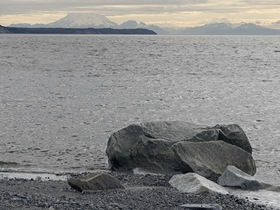 Visit Active Volcanoes in AmericaWhile not necessarily advisable to mess with the Earth’s wrath and fling yourself into deadly conditions, we can walk the razor’s edge between life and death if we exercise caution. After all, you only live once and for many of us, near-death thrills make us feel, well, alive.
Whether we paraglide in Patagonia, bungee in Bora Bora, surf with sharks or heliski the Alps, we love to court disaster. So while a real vacation for some people is a week of total rest and relaxation, for others a leave of absence from the corporate world or 9-to-5 occurs with a leave from rational logic and common sense. To these intrepid travelers, we dedicate this look at some incredible, high-voltage volcanoes in America.
Cleveland Volcano

Anchorage and Fairbanks, Alaska are remote enough for many but by way of contrast, the state’s Aleutian Islands seem otherworldly. The archipelago acts like a bridge between Asia and the Americas and was probably the passage ancient tribes took to cross the continents. The Aleutian chain consists of more than three-hundred volcanic islands and represents the north periphery of the Pacific Ring of Fire. To quote Johnny Cash, “it burns, burns, burns” on a regular basis up here.
The Cleveland Volcano is one of the most spectacular mountains not just in the Aleutians, but anywhere in the Americas. The ultra prominent peak is a stratovolcano in the middle of the archipelago, on Chuginadak Island. Mount Cleveland forms one entire half of the island and as recently as late 2009, sent ash plumes 20,000 feet high into the atmosphere. To visit the Aleutian Islands, visitors can either book a small charter or ferry passage on the Alaska Marine Highway.
Mount St. Helens

May 18, 1980. A day that now lives in infamy in Washington state and indeed, much of America. Less than a month after a magnitude 4.2 earthquake, Mount St. Helens burst spectacularly over a swath of land the size of Andorra and Lichtenstein. The subsequent debris avalanche and near-apocalyptic landscape damage was without precedent. Ash fell in Idaho within hours and as far away as Edmonton, Alberta. The death toll was fifty-seven, with countless homes and property a total write-off.
Mount St. Helens is still active. Visitors can however, hike to the summit via Monitor Ridge trail. The volcano sits within Mount St. Helens National Volcanic Monument, a 110,000 acres area around the mountain, within Gifford Pinchot National Forest. The drive from Seattle is approximately 3.5 hours but a mere 1.5 hours from Portland, Oregon.
Mount Washington
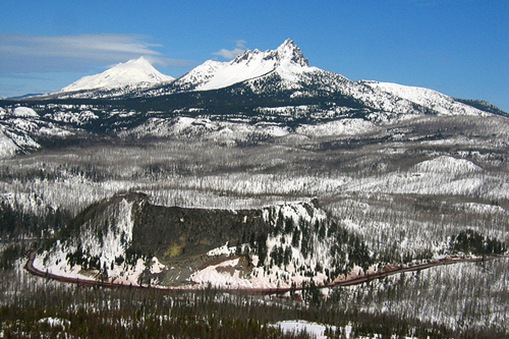
The Pacific Ring of Fire Cascade Range, of which Mount St. Helens and Mount Rainier outside Seattle both belong, contains some gorgeous peaks in Oregon. Mount Washington (the name is indeed ironic) last sent magma into the sky well over a millennium ago, in the late 7th century. The shield volcano is the main feature of the awesome Mount Washington Wilderness area, which offers 52,516 acres of forests, mountains and lakes for visitors to explore.
Mount Bachelor

Dramatic Mount Bachelor and the Mount Bachelor Volcanic Chain is one of the premier attractions in Oregon. With a summit of over 9,000 feet, the mountain is formidable and was last active 10,000 years ago. A stratovolcano on top of a shield volcano, Bachelor is part of the Cascade Range and Three Sisters Wilderness area. The mountain is also a first-rate ski resort with a notable vertical drop in excess of 3,300 feet. The Mount Bachelor ski area in fact, is sixth in size in the United States and behind only Vail, Colorado in summit height. Nearby Bend, Oregon, a fine city of close to 100,000 people, is a short drive from Mount Bachelor.
Jumat, 16 April 2010
Best 7 Most Incredible Sunken Forests on Earth
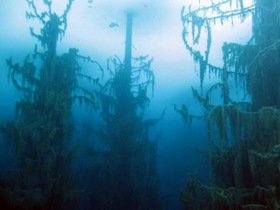 Whether viewed from above or below the surface of the water, whether they are alive or dead, they stand like apparitions, almost supernatural in appearance by dint of the fact that they should not be there. Trees, common sense tells us, were designed to climb into the air rooted in solid ground, not water, and they certainly weren't meant to be found submerged beneath lakes, slowly rotting away like skeletons of their former selves.
The term submerged forest generally describes the remains of trees – especially stumps – that have been flooded by sea level rise. They are found around the coast of Britain, north-west France and Denmark, and have usually been buried in mud, peat or sand for several millennia before being uncovered by sea level change and erosion. Yet other sunken forests can also be found further inland in lakes – some of our own making, some of Nature's – and these are our focus.
1. Lake Kaindy, Kazakhstan

Kazakhstan's Lake Kaindy is one of a kind. Located 2,000 meters above sea level, this 400 metre-long lake reaches depths approaching 30 metres in some places. What makes this body of water truly remarkable, however, are the tall, dried-out trunks of submerged Schrenk's Spruce trees that rise above the water's surface from the bottom of the lake like the masts of mysterious sunken ships.
Midst icy depths: The drowned conifers of Lake Kaindy


In the winter months, Kaindy freezes over, but this doesn't deter some brave souls. As these pictures show, ice divers are drawn to the freezing waters, captivated by the sight of tree trunks encased in a sheet of ice and the strange beauty of the underwater world hidden beneath. During the summer, Kaindy could hardly offer a more contrasting picture, its waters a warm shade of green and turquoise.
Sunnier scenes: Kaindy's trees rise up like the masts of ships


Lake Kaindy is very young, geologically speaking, having only been born last century. It was created due to an enormous limestone landslide. Water flooded the resulting basin and the natural rocky embankment that formed in the middle of the lake partitioned it with a natural dam. Not yet decayed, the drowned trees rise out of the cold waters, offering a refuge for tired swimmers.
2. Lake Bezid, Romania

Situated in Romania's Transylvania region, Lake Bezid hardly needs added reason to carry haunting connotations, but its appearance sure provides one. The gnarled stumps of once lofty trees emerge from the surface of the water like wizened hands, presenting a scene by turns bleak and beautiful. Adding to the air of mystery, the reservoir also conceals a sunken village in its watery midst.
Drowned forest and town: The trees and church tower remains of Bezid


Bezid was artificially created after the entire village of Bezid was flooded, leaving the houses at the bottom of the lake and only the local church tower and trees still visible, looming over the lake. Apparently, a dam was built around 25 years ago to prevent the recurrent flooding of the river valley. Needless to say, the inhabitants of the old village had to be moved away when their homes were drowned.
3. Periyar Lake, India

Periyar Lake in the Indian state of Kerala is another sunken cemetery for trees whose putrefying trunks rise out of the water as if clawing for divine mercy. Covering an area of a 55 km², the lake is fed by the Periyar River and in turn supplies water for the Vaigai River in Tamil Nadu via a tunnel through the Western Ghats. Still, the dead trees betray the lake's recent past as a living forest.
Haunting beauty: Sun striking a cormorant's nest and fog-cloaked trees in Periyar


Periyar Lake is actually an artificial reservoir, a flooded area that was created in 1895 by the building of the Mullaperiyar Dam. The tree stumps are the remnants of the forest that once was, yet the lake curves around the contours of the wooded hills, providing a permanent source of water for the local wildlife, and this is said to be one of the few places where a dam has been good for an ecosystem.
4. Udawalawe Reservoir, Sri Lanka

The twisted, closely-packed boughs standing in Sri Lanka's Udawalawe Reservoir are similar visual reminders of the extent of the forest cover that lay here before the construction of the dam that brought this body of water into being. The deep reservoir is constantly replenished by the never-drying Walawe river, which itself draws most of its water from wooded higher ground and plains.
Submerged forest: Branches emerge from the waters of Udawalawe


In the Udawalawe, as everywhere in nature, where there is death so too is there life. The reservoir may feature the weather-bleached skeletons of thousands of jungle trees, killed off by the dammed water, and it's true wild animals were displaced by its construction; yet despite this, elephants are now attracted to the reservoir, a variety of water birds visit, and important fish species are also found.
5. Lake Volta, Ghana

Myriad dead trees emerge from Ghana's Lake Volta, which has the largest surface area of any reservoir on earth. The lake was formed by the Akosomba hydroelectric Dam, which provides power for much of the country. Completed in 1965, it forced the relocation of 78,000 people to new settlements, along with 200,000 of their animals, while some 120 buildings and countless small residences were destroyed.
Afloat over a former forest: Ebony, teak and mahogany all lie deep in Lake Volta


Lake Volta is again being touted as a resource, but this time for its hidden cache of dead trees: Ghana is seeking to harvest the 14 million cubic meters of submerged timber, though not without controversy. Tropical hardwoods preserved by the lack of oxygen in the water might be worth a fortune, but opponents say underwater logging could be a threat to fishing and upset the lake's ecological balance.
6. Lake Caddo, Texas

This mysterious, even mystical looking swampy scene differs from the others we have so far seen in that the trees growing from their semi-submerged setting are of course not dead but very much alive. The verdant canopy reflected in the still waters beneath is that of Cypress trees, for this is Lake Caddo on the Texas-Louisiana border, home to the world's largest Cypress forest.
Floating forest: Steamy Cypress swamp in Uncertain, TX


Conifers native to the southeastern United States, Cypress trees thrive in humid habitats, and some individuals can live for over 1,000 years. Baldcypresses, which thrive in swampy habitats, have peculiar growths called cypress knees, woody projections above the water that are part of the root system and provide structural support and stabilisation – in flood-prone sites like this one, for example.
7. Kampong Pluk, Cambodia

In Cambodia can be found another floating forest made up of trees growing out of a lake, their tangled roots concealed underwater. The water-dwelling trees of Kampong Pluk are mangroves, and their flooded jungle habitat is home to a variety of wildlife, including crab-eating macaques, as well as humans who harvest shrimp and live in houses that tower in the air atop stilts.
Floating forest, part II: Gnarled trunks rise from the waters of Kampong Pluk

Mangroves are the ultimate survivors in waterlogged environments, growing profusely in saline habitats in the tropics and subtropics where they often dominate the coastlines. Where other trees may soon die when drowned by a deluge of water, the hardy mangroves positively prosper.
The Best 8 New Natural Wonders of the World
 The Latest Additions to the World Heritage List:
Mount Sanqingshan National Park

China's Mount Sanqingshan National Park is one of eight new members of the World Heritage List, a United Nations accounting of the world's most beautiful and extraordinary natural and cultural sites. (The other seven new inductees follow.) Mount Sanqingshan's forested and fantastically shaped granite pillars and peaks can be appreciated by visitors from suspended walking trails.
Joggins Fossil Cliffs

Canada’s Joggins Fossil Cliffs have been termed the “coal age Galápagos” and are the world reference site for the Coal Age, which is about 300 million years ago. The site bears witness to the first reptiles in Earth’s history, which are the earliest representatives of the amniotes, a group of animals that includes reptiles, dinosaurs, birds, and mammals.
The Lagoons of New Caledonia

The tropical lagoons and coral reefs of France's New Caledonia form one of the three most extensive reef systems in the world. They are home to an exceptional variety of coral and fish species and have intact ecosystems with healthy populations of big fish and top predators.
Surtsey

Surtsey is a new Icelandic island and was formed by volcanic eruptions in 1963-67. It has been legally protected from its birth and, as such, provides the world with a pristine natural laboratory, free from human interference. It has provided a unique scientific record of the process of colonization of land by plants and animals.
Saryarka

Saryarka is a largely undisturbed area of Central Asian steppe and lakes in the Korgalzhyn and Naurzum State Nature Reserves in Kazakhstan. These are key stopover points for globally threatened species and provide feeding grounds for up to 15-16 million birds. They are also home to the critically endangered saiga antelope (Saiga tatarica).
Swiss Tectonic Arena Sardona

The Swiss Tectonic Arena Sardona, which includes the Glarus Overthrust, shows how mountains were formed through continental collisions and it has been studied since the 18th century.
Socotra Archipelago

The Socotra Archipelago, of Yemen, has been dubbed the Galápagos of the Indian Ocean. It is especially rich in flora and fauna. About 37% of Socotra’s plant species, 90% of its reptile species and 95% of its land snail species cannot be found anywhere else in the world.
Monarch Butterfly Biosphere Reserve

The three core zones of the Monarch Butterfly Biosphere Reserve protect eight overwintering colonies of the monarch butterfly in the oyamel fir forests of central Mexico. Perhaps a billion monarch butterflies overwinter here in close-packed clusters every year after a 2,100- to 2,800-mile journey. Witnessing this unique phenomenon is an exceptional experience of nature.
Langganan:
Postingan (Atom)